
How to Analyze a Rental Property
- Della Lazare
- Apr 21
- 2 min read
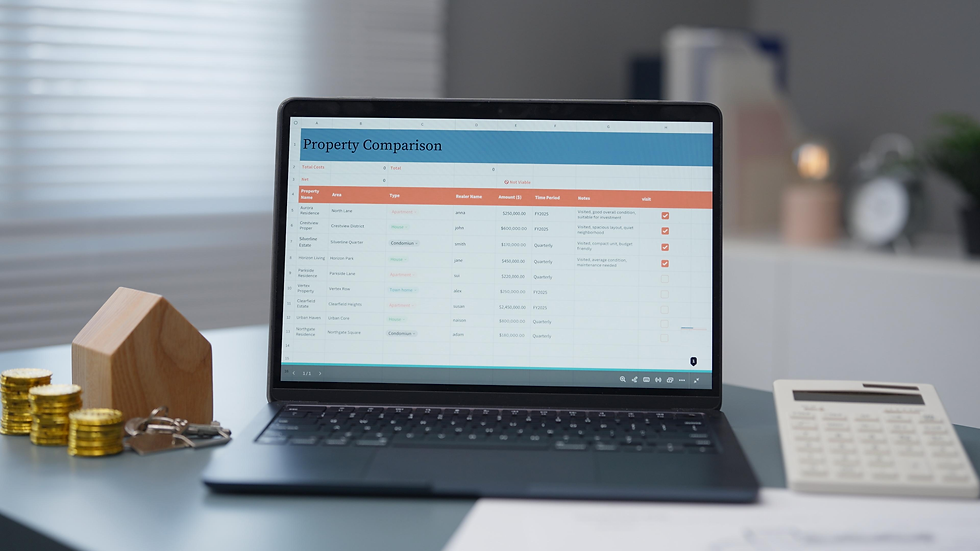
Analyzing a rental property is where deals are won or lost. The goal is simple: make sure the property makes money, not drains it.
🧠 1. Start with Rental Income
Estimate how much the property can realistically earn:
Check similar listings in the area
Look at occupancy rates
Be conservative, not optimistic
👉 Example: ₱15,000/month rent
💸 2. List ALL Expenses
This is where most beginners go wrong.
Include:
Mortgage / loan payment
Property tax
Insurance
Maintenance (5–10%)
Vacancy allowance (5–10%)
Property management (if any)
👉 Never skip hidden costs.
📊 3. Calculate Cash Flow
This is your most important number:
Cash Flow=Rental Income−Total ExpensesCash\ Flow = Rental\ Income - Total\ ExpensesCash Flow=Rental Income−Total Expenses
Positive = good investment
Negative = you’re subsidizing it
📈 4. Check Return on Investment (ROI)
How hard is your money working?
Basic idea:
Annual profit ÷ total cash invested
Higher ROI = better efficiency of your capital.
🏦 5. Evaluate Financing Impact
Loan terms can make or break a deal:
Interest rate
Down payment
Loan term
👉 A good property can become bad with poor financing.
📍 6. Analyze Location Quality
Ask:
Is there strong rental demand?
Are there nearby jobs, schools, transport?
Is the area growing or declining?
👉 Location drives occupancy and appreciation.
🛠️ 7. Inspect Condition & Repairs
Check structural issues
Estimate renovation costs
Add a buffer for surprises
👉 Underestimating repairs is a common mistake.
⏳ 8. Factor in Vacancy Risk
No property is rented 100% of the time.
Plan for:
Tenant turnover
Market slowdowns
👉 Smart investors assume 5–10% vacancy
⚖️ 9. Compare with Other Deals
Never analyze in isolation.
Compare ROI across multiple properties
Look at different locations
Choose the best-performing option
🔑 Bottom Line
A good rental property should:
Generate positive cash flow
Be in a strong location
Have manageable risks
Fit your long-term strategy


header.all-comments